Author: IS-Main

  • India’s Auto Boom and Why Warehousing Made the Fast Lane

    When we look at India’s automobile sector today, what stands out is the sheer momentum. Production lines are buzzing, SUVs and EVs are rolling off assembly floors, and demand is outpacing expectations. The country’s manufacturing revival—evident when the Purchasing Managers’ Index hit a 16-year high in March 2024—is now translating into record vehicle output. Alongside this rise, a quieter but equally transformative story is unfolding: the unprecedented demand for world-class warehousing and and the role of every leading warehouse company

    Policy Support: Anchoring India’s Global Ambitions

    India’s emergence as a global auto hub is no accident—it’s policy by design. Import duties of up to 110% on fully built cars are not about restricting access, but about encouraging local assembly and value creation. The economics are compelling: a popular U.S. electric crossover priced at USD 40,000 abroad could land at ₹60–70 lakh if imported. This naturally tips the balance toward local manufacturing.

    The outcome is multi-layered: global OEMs are embedding deeper into India, supplier ecosystems are expanding, and thousands of jobs are being created. Consumers still get access to advanced vehicles, but with stronger domestic roots.

    Why Warehousing is the Growth Lever

    In this new landscape, scaling production is not just about plants and assembly—it’s about supply chain readiness. Modern OEMs require Grade-A, ready-to-deploy logistics park infrastructure that can scale at speed, offer global-class reliability, and integrate seamlessly with both suppliers and customers.

    Chakan has emerged as a case in point. With its unique concentration of OEMs and tier-1 suppliers, backed by connectivity to national highways and JNPT port (~120 km away), it is the natural hub for inbound components and outbound finished vehicles. Reflecting this, Pune absorbed 5.1 million sq. ft. of warehouse space in H1 2025—over 50% higher year-on-year.

    IndoSpace: Partnering in India’s Auto Future

    At IndoSpace, we have been building for this future well before it arrived. Our ₹1,037 crore investment in Chakan V, a 188-acre Grade-A logistics park, reflects both conviction and responsibility: conviction in India’s automotive trajectory, and responsibility to enable it with the right infrastructure.

    Here’s what makes these facilities game-changing for automakers:

    • Speed to Market: Plug-and-play shells with 12m clear heights and FM2 floors (~5T/m² load) allow immediate operationalisation—ideal for bulky automotive parts.
    • Dock-to-Dispatch Efficiency: Deep 16.5m truck aprons and optimised layouts support just-in-sequence delivery with speed and precision.
    • Reliability: NFPA/FM-standard fire safety, 10-year standing seam roof warranties, and natural lighting/ventilation ensure resilience and comfort.
    • Sustainability: EDGE/IGBC certifications and solar-ready rooftops reduce carbon footprints and align with OEMs’ green mandates.

    India’s automotive story is no longer just about volume—it’s about leadership. Policy alignment, consumer demand, and infrastructure momentum are converging to reposition the country as a global hub.

    And as we’ve seen, the future of auto manufacturing will be written not only on assembly lines, but in the speed, scalability, and sustainability of the industrial parks and warehousing that supports them. At IndoSpace, we see our role as clear: to build the resilient logistics backbone that allows ambition to translate into execution.

    For automakers, the question isn’t just where they build vehicles. It’s where they build their future.

    Get in touch :- leasing@indospace.in

    Authored by
    Mudit Dobhal
    Senior Vice President – Strategy & Business Development, IndoSpace
  • India’s festive rush puts Short-Term Leasing in the spotlight

    In India, the festive season is a unique confluence of economic activity and cultural fervour. Over a span of several weeks, consumer behaviour intensifies as households plan major purchases, retailers build inventory depth, e-commerce platforms schedule high-volume deliveries, and supply chains mobilise across tiers. This surge arrives in concentrated waves around various festivals, creating opportunity as well as operational pressure.

    The macro data support this backdrop. Official estimates show private final consumption expenditure grew 7.2 percent in FY 2024–25, indicating healthy household demand through the latest financial year. Further, a credible survey highlighted that 92 % of consumers plan to spend the same or more on festive shopping compared to last year. This reflects steady purchasing power and confidence across households, reinforcing the intensity of seasonal demand. For businesses, such widespread intent translates into concentrated spikes in inventory movement, tighter delivery cycles, and heightened pressure on supply chains. To manage these peaks effectively, companies require capacity that can expand temporarily and then contract once the festive period concludes.

    Short-term leasing of warehousing and logistics space can serve as a practical response. The model enables businesses to add capacity for specific months, aligning footprint with demand peaks and then normalising once the season passes. This approach is reinforced by policy infrastructure that has matured over the last three years, including the National Logistics Policy.

    Why short-term leasing fits the festive operating rhythm:

    • Operational elasticity when order volumes spike: Demand during the festive period is episodic and location-intensive. Short-term leases allow quick ramp-up of staging, cross-dock, or overflow storage within the same catchment as consumption, which reduces handling time and helps maintain on-shelf availability as promotions rotate through the season.
    • Cost alignment with seasonality: Committing to long-duration space for a short peak can inflate fixed costs. A time-bound lease lets firms convert part of that requirement into a seasonal expense, preserving capital for price promotions, product expansion, and customer service enhancements that matter most in a competitive festive marketplace. The objective is not simply to cut costs, but to match cost timing with revenue timing.
    • Faster readiness and simpler deployment: Short-term space is typically plug-and-play. Minimal fit-outs, standard safety and compliance features, and established dock infrastructure allow teams to stand up operations quickly. The lost time between deciding to expand and shipping the first pallet is reduced, which is critical when sales windows are measured in days rather than quarters.
    • Closer access to consumption hubs: The ability to position stock near city clusters improves order-to-delivery reliability and takes pressure off main freight corridors. This proximity is aligned with the government’s multi-modal focus, where national programmes such as PM GatiShakti and the Ministry of Road Transport and Highways’ work on Multi-Modal Logistics Parks are designed to create denser, better-connected nodes for freight.
    • Cross-category applicability: Festive demand touches multiple categories at once, from fashion and FMCG to consumer electronics, home products, and gifting. Short-term leasing can provide a flexible framework across these sectors, whether it is accommodating bulky durables that require large floor areas or managing fast-moving products that depend on efficient pick-and-pack operations.

    The Case for Time-Bound Capacity

    Festive demand in India can be intense, time-boxed, and dispersed across many product categories. Meeting the demand requires infrastructure that stretches just enough and only for as long as needed. Short-term leasing can provide that balance. It can convert fixed commitments into seasonal capacity, preserve responsiveness near consumption centres, and fit within the direction of ongoing logistics reforms that favour flow, transparency, and interoperability. For operators planning the next few months, it is a measured way to keep service levels high while keeping long-term obligations in check.

    In the end, the festive season is a reminder that supply chains are not only about moving goods, but about matching pace with people’s lives. Temporary capacity ensures that infrastructure is as responsive as the demand it serves.

    Get in touch :- leasing@indospace.in

    Devan Prabaru
    Authored by
    Deven Pabaru
    Managing Director – Revenue & Customer Growth, IndoSpace
  • How IndoSpace is Empowering JIT Manufacturing in Kharkhoda, NCR

    The post-pandemic world has dramatically reshaped supply chain strategies across industries. In 2021, the global supply chain faced significant disruptions due to semiconductor chip shortages, introducing the need for more agile solutions like just-in-time (JIT) manufacturing. Traditionally a strategy to minimize inventory costs, JIT has now become an essential part of the manufacturing process, particularly in sectors like automotive and electronics.

    The surge in consumer demand post-pandemic, coupled with the rise of lightning-fast deliveries, has extended the JIT approach beyond B2C into heavy manufacturing, reshaping industrial operations. A prime example of this is Maruti Suzuki’s facility in Kharkhoda, Haryana, which is being dubbed a “mini-Japan” for its integrated cluster development model, designed to enhance production efficiency and reduce lead times facilitating JIT operations.

    Moreover, the concept of cluster development, where industries co-locate to share infrastructure and resources, is gaining momentum. This not only facilitates quicker deliveries but also optimizes costs for manufacturers. The ongoing transformation in supply chain logistics reflects a broader industry shift towards meeting increasing consumer demands while minimizing operational inefficiencies.

    The Growing Significance of the KMP Highway

    One of the most crucial infrastructural developments that exemplify this shift in India is the Kundli-Manesar-Palwal (KMP) Expressway, also known as the Western Peripheral Expressway. Conceived in 2003 and completed in 2018, this highway has proven to be a significant catalyst for industrial and real estate growth in Haryana. The strategic placement of the KMP Highway connects major industrial areas, creating an ecosystem that supports faster distribution and logistical operations. It has particularly transformed the surrounding regions into prime industrial and residential hubs.

    Companies such as Atlas Cycles, Hilton Rubber, and ECE have already established their facilities near the KMP Highway, recognizing its importance in improving supply chain efficiency. The Haryana government is planning to construct five modern cities along this expressway, further bolstering industrial and real estate growth. This development is expected to drive consumer demand in the region, creating a thriving economic zone that is highly connected to national highways, airports, and rail networks.

    IndoSpace’s Strategic Role in Enabling JIT Manufacturing

    IndoSpace, India’s leading developer of industrial and logistics parks, has been at the forefront of building infrastructure to support the evolving supply chain dynamics. With facilities strategically located in key industrial areas such as Pune, Chennai, NCR, and Bangalore, IndoSpace has established itself as a crucial enabler of just-in-time manufacturing and warehousing solutions. Over the years, IndoSpace has delivered more than 70 factories across these regions, serving a wide range of sectors including automotive, electronics, e-mobility, food processing, and consumer durables.

    IndoSpace is a key player in the Delhi NCR region. Strategically located parks in Badli, Bhaproda, Luhari, and Farukhnagar offer Grade-A industrial and warehousing solutions tailored to diverse needs. Particularly in the NCR region, IndoSpace’s proximity to the Kharkhoda Industrial Area, with parks in Badli and Bhaproda, makes it the ideal partner for manufacturers. Badli Industrial Area, located just 7 km from the KMP Expressway and 3 km from Delhi’s borders, benefits from excellent connectivity, making it a key Industrial & logistics hub. The presence of built-to-suit and plug-and-play options allows ancillary suppliers and third-party logistics (3PL) providers to easily integrate into the supply chain, ensuring seamless operations for Original Equipment Manufacturers (OEMs) on a JIT basis.

    IndoSpace’s parks are strategically positioned to meet the immediate requirements of manufacturers with ready-to-move inventory that can quickly support scaling businesses. These custom-built facilities reduce the time to market, as they eliminate the need for building manufacturing facilities from the ground up. This also enables expansion using an asset-light approach, enabling companies to expand without heavy capital expenditure in top manufacturing hotspots. This leads to improved cash flow due to reduced fixed capital investment, freeing up more cash for working capital needs.

    Key Benefits of IndoSpace’s Parks: Badli and Bhaproda

    IndoSpace’s parks in Badli and Bhaproda offer significant advantages for companies looking to optimize their logistics and manufacturing operations. The Badli park, located in the Jhajjar district of Haryana, is part of a well-developed road network connecting New Delhi and Gurugram, two major industrial, warehousing and logistics hubs in India. This park has been identified as a “Smart Community,” a designation that aligns with the Haryana government’s plans to promote technological and infrastructure development in the region. The presence of sectors such as 3PL, FMCG, e-commerce, and electronics in this area underlines its strategic importance.

    Similarly, Bhaproda is situated within the Jhajjar Industrial Area and benefits from direct connectivity to NH 334B, NH 9, and NH 352, ensuring smooth transportation and delivery channels across the northern region of India. Bhaproda’s existing warehousing ecosystem, which includes major players like DHL, HUL, Nestlé, P&G, and Flipkart, makes it an attractive location for manufacturers seeking efficient distribution networks. IndoSpace’s facilities in both Badli and Bhaproda provide companies with built-to-suit options and plug-and-play solutions that cater to specific operational needs, making them ideal for companies seeking JIT manufacturing support. To top it all off, these parks come with all the ESG-focused features that are associated with all IndoSpace parks, from green building certifications to industry-leading amenities like Electric Vehicle (EV) charging stations and e-bikes.

    IndoSpace has positioned itself as a vital player in the industrial, warehousing and logistics sectors by offering tailored solutions for a diverse range of industries. Its strategic locations in Badli and Bhaproda, close to the KMP Expressway and major industrial hubs, provide manufacturers and 3PL providers with the infrastructure needed to operate JIT supply chains effectively. As India continues to evolve its supply chain strategies in the face of global challenges, IndoSpace’s foresight and expertise ensure that businesses can meet rising consumer demands with agility and efficiency.

  • InLogis CHEMBUR: The Future of Quick Commerce Delivery

    Before placing an order, consumers typically browse multiple websites to compare delivery times for the same item, ultimately choosing the retailer that can deliver the product the quickest. Many consumers are even willing to pay subscription fees for the convenience of receiving their orders within a few hours.

    Nothing exemplifies this trend better than the rapid growth of Blinkit, which was influential in taking Zomato, its parent company, from being loss-making to profitability within a few quarters. In fact, between 2021 and 2023, the quick commerce segment has grown 230%, accounting for 40% of total online grocery sales this year.

    Rising Demand for Convenience

    While the concept of quick commerce was just emerging in India in 2022, by 2024, the demand for lightning-fast deliveries has become widespread in metro cities across India, specifically in Mumbai. This transformation is attributed to the development of intricate delivery networks, dark stores, and, most importantly, in-city mini-warehousing spaces.

    This evolving consumer behavior challenges traditional e-commerce models and underscores the need for logistics solutions that can keep pace with the demand for quick delivery. Companies are increasingly investing in infrastructure and technology to meet these heightened expectations and gain a competitive edge in a crowded marketplace. As online shopping rapidly expands, consumers now expect faster and better service, intensifying competition among e-commerce companies. Offering quick delivery has become a major differentiator for such businesses.

    This surge in e-commerce has increased the need for efficient storage and distribution centers. Additionally, as the manufacturing sector grows, so does the demand for warehousing space to store raw materials and finished products.

    The need for in-city warehousing solutions in Mumbai has become increasingly apparent. Urban areas require strategically located warehouses to facilitate rapid distribution and meet the pressing demands of consumers who expect quick turnaround times. But there is one thing that comes in the way of logistical spaces – spaces (or the lack of it).

    In-City Logistic Demand: The Only Way Is Up

    The metro city of Mumbai is home to a population of 21.6 million spread across a sprawling area of 600 square kilometers, connecting four districts. Expanding businesses need to cater to all these areas, which necessitates central warehousing. But the limited space in the city, especially in strategically important locations, is a big challenge for retailers as well as logistics service providers looking to expand in the city. Sensing this challenge, IndoSpace has come up with an innovative warehousing solution — INLOGIS Chembur.

    InLogis Chembur, which connects South Mumbai, western suburbs, eastern suburbs, and Navi Mumbai, serves over half of Mumbai’s population and meets the growing demand for quick and efficient urban distribution services. It is well connected to major transport routes, including the Mumbai Trans Harbour Link (MTHL), Mumbai-Pune Expressway, JNPT Port, Eastern Freeway, Eastern Expressway, and airports, including the upcoming Navi Mumbai International Airport.

    In this vertically growing city, warehousing spaces are also expanding vertically. The multilevel facility at InLogis Chembur has eliminated the issue of dead space. InLogis Chembur features cargo elevators and docking stations designed for rapid servicing, resulting in improved dispatch lead times despite multi-level operations. By offering scalable options ranging from 5,000 to 35,000 square feet, and spanning over 1.5 lakh square feet, the company effectively supports the needs of emerging and established q-commerce companies.

  • Budget ‘24 gives a bright outlook for industrial real estate

    Earlier this year, before the Honorable Finance Minister Smt. Nirmala Sitharaman tabled the interim budget, I briefly touched upon the need for easing land acquisition for warehouse development through PPP models, echoing the sentiment of the industrial real estate sector. With the Honorable Finance Minister announcing the facilitation of “Plug-n-Play parks” across 100 cities in the recent budget proposal, I am sure many in the industry will consider their voices heard. What’s more, this was merely one of many welcome moves that the government announced, promising a boost to the nation’s efforts towards becoming a developed economy by 2047.

    Plug-n-Play industrial parks: A shared vision

    The government’s announcement of supporting the development of a hundred Plug-n-Play parks across the country, along with the sanctioning of 12 industrial parks as part of the National Industrial Corridor Development Programme (NICDP), couldn’t have come at a better time. IndoSpace — having developed 52 Grade-A logistics parks with Plug-n-Play capability across the country — can attest to the necessity and impact of this move. As we continue to develop more Grade-A spaces, knowing that the government shares this vision of upgrading India’s industrial and logistics infrastructure will add further impetus to our growth. Without a doubt, this will transform not just industrial development but also urban planning in the concerned regions, stimulating economic growth.

    Need for private sector participation to develop e-commerce hubs

    In addition to the need for Plug-n-Play facilities the need for specialized e-commerce hubs to bring trade and export under one roof was brought to the forefront. To meet this demand, private sector participation is crucial. By investing in and developing these hubs, IndoSpace is trying to bring in the necessary infrastructure and technology to enhance efficiency and scalability. This collaboration will not only speed up the establishment of these hubs but also integrate advanced technologies, improving logistics and customer service. As India aims to become a global e-commerce leader, the joint efforts of both public and private sectors will be key to driving industry growth and ensuring seamless operations.

    Increased demand for cold chain storage near consumption centers

    The Honorable Finance Minister highlighted the need for special cold storage facilities by proposing a plan to set up large-scale clusters for vegetable production closer to major consumption centers. This was further emphasized by the planned support for vegetable supply chain startups. As highlighted in the 2024 budget, establishing Grade-A parks provides a crucial platform for expanding specialized facilities like cold storage. This initiative will enable companies to efficiently manage perishable goods, pharmaceuticals, and other temperature-sensitive products, ensuring their quality and safety from production to consumption.

    2024 budget on real estate: Government reinforces logistics as key driver of economic prosperity

    The 2024 budget, among many other things, is a cause of optimism for Indian industry, especially the industrial real estate sector. It reemphasizes the fact the government views the industrial and logistics infrastructure as the cornerstone of economic prosperity. Given enough time, these initiatives will not just be appreciated by those within the logistics sector, but also by the wide spectrum of stakeholders across the Indian economy.

    Authored by
    Rajesh Jaggi
    Vice Chairman, Real Estate – Everstone Group
  • Fostering excellence through wellness and customer-centricity, the IndoSpace way

    The success of any organization depends not just on the quality of its infrastructure and the tools it deploys, but also on the well-being of its employees and clients. Health and well-being are the cornerstones of excellence, driving innovation, productivity, and overall organizational success. At IndoSpace, we understand this fundamental principle deeply and have integrated it into our operational ethos.

    Promoting Wellbeing and Excellence Through Sports Initiatives

    Our commitment to customer excellence goes beyond constructing Grade-A buildings; it extends to creating environments where tenant employees can thrive both mentally and physically, ensuring they are equipped to pursue excellence in every endeavor. That’s the reason we consistently invest in sports and fitness-related initiatives. The company’s flagship initiatives, the IndoSpace Premier League and the IndoSpace Marathon, have emerged as highly anticipated events, drawing thousands of participants annually from across our facilities in multiple regions, including Pune, Chennai, NCR, and Bengaluru.

    These events serve as platforms for tenants and their workforce to engage in friendly competition, push their limits, and experience the thrill of achievement. The IndoSpace Premier League, a multi-regional sporting extravaganza, attracts over 300 teams annually, igniting a fierce yet healthy rivalry that transcends industry boundaries. Similarly, the IndoSpace Marathon, with 5,000+ runners participating in it, has become a testament to the company’s unwavering commitment to promoting physical and mental well-being.

    Taking this commitment up a notch, we have now taken the step to make sports and wellness a part of day-to-day life at our Industrial parks, and not just a part of time-bound events. How? By setting up our first multi sports arena and a fully equipped gymnasium within our flagship park at Chakan.

    A glimpse of IndoSpace’s Chakan Sports Arena

    Spanning an impressive 20,000 square feet, the state-of-the art sports arena stands as a testament to the company’s vision of creating an environment that nurtures the mind, body, and spirit of its tenants’ workforce. Strategically located at the heart of IndoSpace’s industrial parks, the IndoSpace’s Chakan sports arena offers a multitude of amenities designed to cater to diverse fitness and recreational pursuits. From a fully equipped gym to multipurpose courts for cricket, football, volleyball, and badminton, this facility ensures that tenants’ employees have access to a comprehensive range of activities that promote physical and mental well-being.

    The response from our customers and their workforce was so overwhelming that it became challenging to manage the influx of requirements to book slots. We addressed this by introducing an app facility to manage traffic and implementing stringent protocols to maintain quality and user satisfaction. Such efforts have not only met but exceeded tenant expectations, enabling them to enjoy these new amenities without inconvenience.

    Customer Excellence through Health and Wellness

    The positive impact of our fitness amenities on tenant relationships is profound. Tenants report improved work environments and higher employee satisfaction, contributing to a strong sense of loyalty. With 90% of our customers being a part of our facility for many years, our commitment to wellness clearly adds value to the tenant’s experience. These amenities have inspired a trend within the sector to focus on value-added services, further enhancing our competitive advantage.

    Our sports and fitness facilities do more than just promote health; they also foster collaboration and innovation among tenant companies. Events such as inter-company leagues and training sessions encourage interaction and camaraderie, breaking down silos and facilitating knowledge exchange. The excitement generated by these events often leads to higher engagement and satisfaction among employees, reflecting positively on their overall productivity and contribution to organizational performance.

    Looking ahead, we look forward to promoting health, wellness and excellence further across our industrial parks. Plans are already underway to develop a new sports arena in our Oragadam Park, designed to meet the evolving needs of tenant companies. We envision these facilities continually adapting based on tenant feedback, ensuring they remain relevant and beneficial.

    Authored by
    Anil Singh
    Executive Director and Head-Facility Management at IndoSpace
  • IndoSpace Continues to Remain the Partner of Choice for Indian 3PL Players

    In recent years, the logistics industry in India has experienced significant changes, with a substantial rise in Third-Party Logistics (3PL) providers. This growth in the 3PL industry is primarily due to various factors such as advancements in technology, evolving customer needs, and the increasing complexity of supply chains, driving businesses to outsource their end-to-end logistical operations. This has, in turn, driven the demand for warehousing.

    The Rise of 3PL

    One of the primary reasons for the growing relevance of 3PL providers is their ability to offer integrated solutions. These solutions encompass a wide range of services including primary and secondary transportation, warehousing, and other value-added services. By offering a comprehensive package, 3PL providers are able to meet the diverse needs of their customers, thereby increasing their market appeal.

    Moreover, 3PL providers leverage advanced technology to provide end-to-end visibility of the supply chain. This enables customers to track their shipments in real-time, thereby enhancing their control over the supply chain. Most importantly, 3PL providers are well-equipped to optimise costs while at the same time ensuring on-time delivery. They leverage their vast network and advanced logistics parks solution to reduce transportation and warehousing costs, while ensuring timely delivery of goods.

    The Growing Demand for Warehousing

    Warehousing plays a pivotal role in the logistics industry, and its importance has grown significantly over the past decade. There are several underlying trends that have contributed to this growth, beginning with the growth of e-commerce in India.

    Reportedly, India’s e-commerce market is expected to nearly double between 2024 and 2026, going from US$ 111 billion to US$ 200 billion in the period. The rise of e-commerce and digital commerce has led to an exponential increase in the demand for warehousing. As more and more consumers turn to online shopping, businesses require efficient warehousing solutions to store their goods and fulfil customer orders.

    Another trend that has contributed to the growth of the warehousing sector is the increasing consolidation of warehouses. Businesses are moving away from multiple smaller warehouses to larger, centralised ones to achieve economies of scale and improve operational efficiency. Additionally, more and more businesses are outsourcing their warehousing needs to 3PL providers, further driving the demand for warehousing services, especially those located near manufacturing hubs and consumption hotspots.

    Warehouses located at strategic locations, such as near highways, airports, and seaports, can significantly reduce transportation time and costs. Large-scale fulfilment centres located at the periphery of cities also enable businesses to quickly and efficiently meet customer demands.

    The Role of IndoSpace in the 3PL Industry

    IndoSpace, a leading provider of industrial and logistics real estate in India, is at the forefront of the warehousing revolution. With its commitment to quality, sustainability, and governance, IndoSpace has emerged as the partner of choice for over 125 MNCs and industry leaders in the 3PL industry.

    IndoSpace is a key player in the Delhi NCR region, leasing 5.1 million sq ft of space to leading brands for their third-party logistic requirement. Strategically located parks in Badli, Bhaproda, Luhari, and Farukhnagar offer Grade-A warehousing solutions tailored to diverse needs.

    Swift and Efficient Park Operation

    One of the key strengths of IndoSpace is the efficiency of its park operations. The company leverages advanced technology and robust processes to expedite logistical processes. This enables its customers to focus on their core business activities, while IndoSpace takes care of their warehousing needs.

    Superior Quality Infrastructure

    IndoSpace is committed to providing superior quality infrastructure to its customers. The company’s modern grade A warehouses are equipped with state-of-the-art facilities and adhere to international standards of safety and environmental sustainability. This ensures that customers can store and handle their goods in a secure and efficient manner.

    Compliance and ESG Commitments

    IndoSpace places a strong emphasis on compliance and Environmental, Social, and Governance (ESG) commitments. The company’s operations and processes are aligned with the regulations and international standards set by the International Finance Corporation (IFC) and the World Bank. This commitment to compliance and ESG has helped IndoSpace build trust and forge long-term relationships with its customers. Moreover, IndoSpace has become a partner of choice for global businesses looking to build sustainability into their supply chains.

    Flexible Warehousing Solutions

    IndoSpace offers flexible warehousing solutions to meet the diverse needs of its customers. The company’s ready-to-use ‘Plug n Play’ spaces are ideal for businesses that require immediate warehousing solutions. For businesses with specific needs, IndoSpace offers ‘Built-to-Suit’ solutions, wherein the company designs and constructs warehouses as per the customer’s requirements.

    Conclusion

    The rise of the 3PL industry in India has brought the warehousing sector into the spotlight. With its strategic importance and rising demand, warehousing has become a key component of the logistics parks industry. As the industry continues to evolve, companies like IndoSpace are leading the way by offering innovative and sustainable warehousing solutions. With its customer-centric approach and commitment to quality, IndoSpace is set to shape the future of warehousing for 3PL in India.

  • How IndoSpace is powering the Auto Sector

    India, a bustling hub of auto manufacturing, is undergoing a transformative shift in its approach to vehicle production. The Internal Combustion Engine (ICE) segment, which still dominates the market, is gradually making way for Electric Vehicles (EVs), Hydrogen vehicles, and other alternative sources of propulsion. This shift is not just a reaction to global environmental trends but a proactive move towards sustainable and efficient mobility solutions.

    The focus on local manufacturing and exports under the ‘Make for the World’ initiative is strengthening India’s auto manufacturing sector. The initiative positions India as a leading global auto supplier, which not only meets domestic demand but also exports high-quality vehicles and components to international markets. The result is an impressive growth trajectory, marked by technological advancements, increased investment, and a strong push towards green mobility.

    However, this evolution does not come without its share of challenges. For automakers, including Original Equipment Manufacturers (OEMs) and ancillaries, expansion is critical to meeting increasing demand and staying competitive. Yet, the traditional approach of buying land and building factories is a capital-intensive and time-consuming process, often hindering growth. But it’s not the only option.

    Different Roads to Operational Expansion

    For OEMs and ancillaries, the decision to expand often boils down to two options: buy land and construct a factory or opt for an asset-light strategy. The former, while offering complete control, requires substantial capital investment, time, and resources. It also involves navigating complex regulatory environments, land acquisition challenges, and construction delays.

    On the other hand, the asset-light strategy involves leasing a ready-to-use factory, significantly reducing upfront investment and time to market. This allows companies to focus on their core competencies, such as product development and market expansion, without worrying about infrastructure management.

    Yet, finding suitable rental factories that meet specific requirements can be a daunting task for many auto manufacturers. This is where IndoSpace steps in, offering asset-light solutions that cater to the unique needs of the auto manufacturing sector.

    IndoSpace’s Asset Light Solutions to Boost Growth

    IndoSpace, a pioneer in industrial real estate, is revolutionizing the auto manufacturing landscape with its asset-light solutions. Offering rental factories with Ready to Move (RTM) and Build to Suit (BTS) options, IndoSpace enables auto manufacturers to kickstart their operations in a shorter time frame, without the hassles of land acquisition, regulatory approvals, and construction.

    The benefits of asset-light manufacturing are manifold. Companies can save on capital expenditure, go to market quickly, enjoy operational flexibility, and respond swiftly to market changes. With IndoSpace’s grade A industrial parks, companies also gain access to strategically located facilities that are compliant with global standards and equipped with state-of-the-art features.

    IndoSpace’s solutions are not just about providing space; they are about fostering growth. By taking care of infrastructure needs, IndoSpace allows auto manufacturers to focus on innovation, productivity, and expansion, propelling them towards success.

    Successful Auto Manufacturers at IndoSpace

    IndoSpace’s value proposition has resonated with numerous auto manufacturers. Currently, 37 auto companies have partnered with IndoSpace, leveraging its industrial parks to fuel their growth. These companies have recognized the benefits of asset-light manufacturing and the advantages that IndoSpace brings to the table.

    Aptiv, an Irish-American automotive wire harness and safety component supplier, is one among many auto manufacturers that have benefited from IndoSpace’s services. Aptiv’s facility at IndoSpace Vallam, Chennai, expanded from 61,000 sq.ft. in 2017 to 1 Lakh sq.ft. in 2019. Similarly, the facility at IndoSpace Chakan I Phase II expanded from 2.5 Lakhs sq.ft. in 2020 to 3 Lakhs sq.ft. in 2021. IndoSpace’s flexibility to accommodate Aptiv’s scaled up requirements enabled the manufacturer to grow rapidly by gaining new business from various clients. Moreover, the installation of rooftop solar solutions helped Aptiv achieve its sustainability target of meeting 25% of its energy needs with renewable power.

    How IndoSpace is powering the Auto Sector

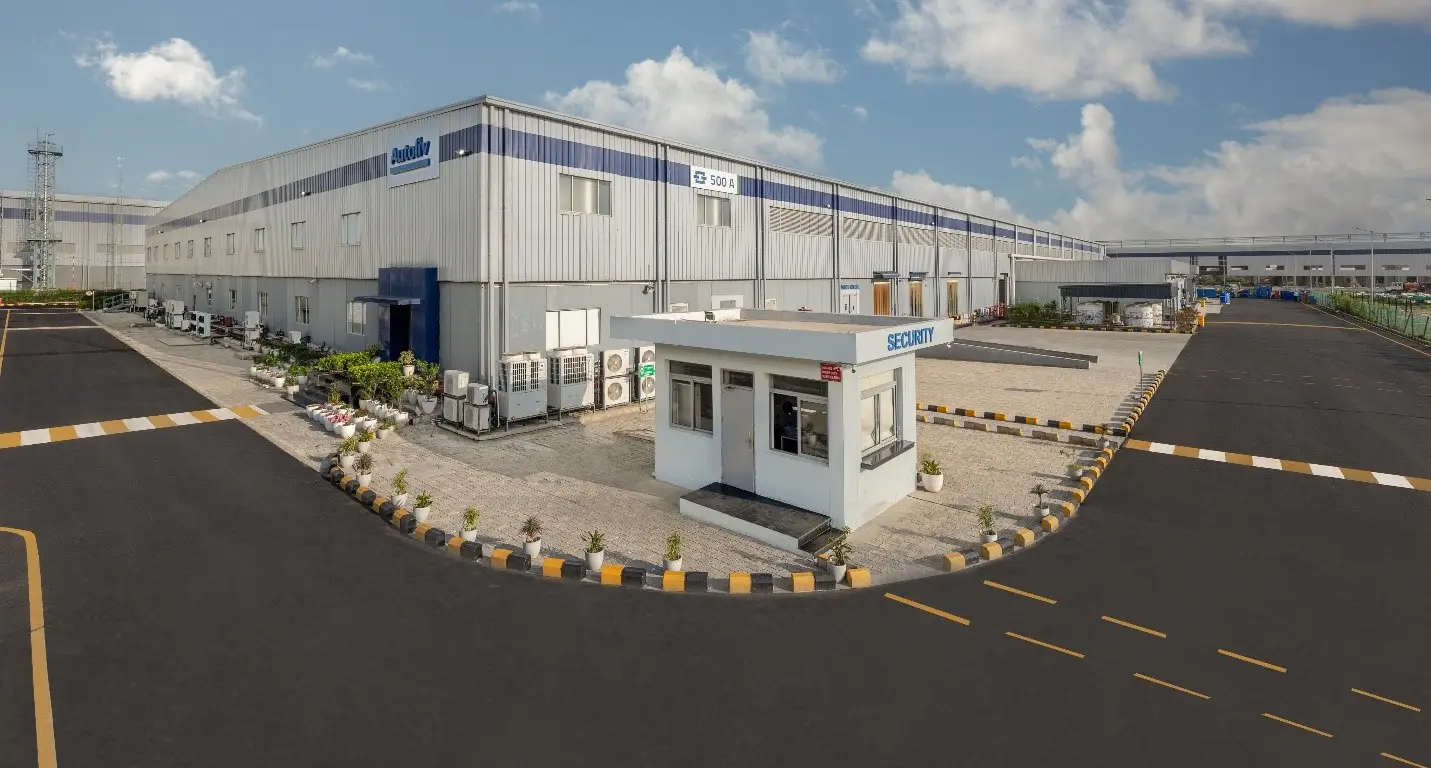
    Similarly, Autoliv, an American-Swedish automotive safety supplier, also serves as a testament to IndoSpace’s commitment to safety and compliance. Located at IndoSpace Badli, Delhi-NCR, the Autoliv facility is a 100% compliant, secure and efficient manufacturing facility that supports the safety supplier’s growth ambition.

    Responsible Growth with ESG

    IndoSpace’s commitment extends beyond providing high-quality industrial parks. The company’s Environmental, Social, and Governance (ESG) approach is evident in its initiatives to reduce its carbon footprint, contribute to societal goals, and ensure governance compliance.

    For instance, IndoSpace was among the first businesses to adopt green warehousing and is committed to building best practices and undertaking a resource-conserving expansion journey. Furthermore, it has received several accolades for its sustainable practices, including the IGBC Platinum Rating for the Logistics Parks Category and the esteemed ‘Excellence in Design for Greater Efficiencies’ (EDGE) certification.

    Moreover, IndoSpace believes in giving back to society. Through various CSR initiatives, the company contributes to the development of local communities around its parks. On the governance front, IndoSpace maintains high standards of transparency and accountability, ensuring long-term value creation for all stakeholders.

    Conclusion

    IndoSpace is playing a pivotal role in revolutionizing auto manufacturing in India. By providing asset-light solutions, the company is empowering auto manufacturers to grow and succeed, while also making a significant impact through its ESG practices.

    The importance of warehousing for auto manufacturing in India cannot be overstated. As the industry continues to grow, the demand for efficient and advanced industrial warehousing solutions will only increase. With its rental factories and warehouses, IndoSpace can support your growth and help you navigate the evolving auto manufacturing landscape with ease.

    With IndoSpace, the future of auto manufacturing looks promising. So, take the next step towards growth by exploring IndoSpace’s offerings today.

  • From overcoming challenges to seizing opportunities, Maersk is revolutionizing warehousing in India

    It’s a quiet morning, starting with coffee and music. As you reach for your earpods, a mishap occurs—one falls into your coffee. Disappointment looms, but a one-day delivery service saves the day. While brewing another cup, you quickly order new earpods. By the time your coffee is ready, the replacement order is confirmed. In the afternoon, a knock on the door announces the arrival of your new earpods, brightening your day.

    This incredible convenience has been made possible by the transformation of warehousing. The omnichannel inventory is available in these warehouses/dark stores across cities and towns.

    Warehouses have become the beating heart of operations, where careful coordination of inventory, efficient order processing, and value-added services come together to make everything run smoothly. In essence, warehouses are the linchpin that ensures a perfect balance between what’s available and what’s needed, ensuring that products reach customers when they’re required.

    Warehousing in India: Trends and Opportunities

    India’s logistics sector LPI Index, growth is being fuelled by “Make in India,” PLI schemes, and China +1 strategies, leading to a surge in demand for warehousing. Government efforts through the Dedicated Freight Corridor (DFC), Delhi-Mumbai Industrial Corridor (DMIC), and Multi-Modal Logistics Parks (MML) are also in the direction of reducing logistics cost as a percentage of GDP from 12 to 14% to 8%.

    Prem Ramchandran, Regional Head – Fulfilled by Maersk for India, Middle East and Africa says, “India needs to improve in the quality of logistics parks to match the global standards and to support the economic pace to be the 3rd largest economy.”

    Industry status and the national logistics policy accelerated progress, while technology adoption (WMS, automation) soared. Innovations such as 4PL, control towers, AI, and Cold Box delivery reshaped operations.

    Hub-and-spoke transport increased competition and fostered start-ups. Capacity building, consolidation, and MMergers and Acquisition trends emerged. Evolving consumer behaviour required adaptation to omni-channel retailing, cross-border trade, and direct-to-consumer trends.

    Maersk: Exemplifying Expertise in Logistics Solutions

    India aims to be in the top 25 of the Logistics Performance Index and to reduce logistics costs from 13% to 8% of GDP in five years. The support of the warehousing industry is critical to the demand for logistics infrastructure, which includes parks, cold chain facilities, and eco-friendly practices to achieve these ambitious goals.

    Maersk has been working to address the pain points of the integrated supply chain and to create a network of assets to support the market demands. Maersk is setting up strategically located grade-A sites to serve as hot spots of production zones, consumption centres, and logistics efficiency-based locations.

    Their emphasis lies in developing cutting-edge infrastructure, using technology for fast turnarounds, and adapting to the demands of omni-channel distribution in today’s Volatile, Uncertain, Complex, and Ambiguous (VUCA) world.

    To facilitate these requirements, Maersk has partnered with large developers like IndoSpace – a reliable steadfast partner that has 51 Parks with a portfolio of 58 million square feet across 11 cities fostering growth and reliability. The partnership extends across three strategic clusters – West, North, and South.

    Amit Gourwar, FbM Delivery Head IBS, Maersk says, “Having quality developers helps to match the compliance standards and sustainability goals, the sharply designed park layouts and warehouse features enable a better quality of operations.”

    Maersk’s Commitment to Expansion

    Maersk is committed to expanding its presence in India by venturing into tier 2 and tier 3 geographies. The launch of the Nagpur warehouse marks the company’s entry; plans extend to northeast, central and southern coastal parts.

    Prioritising sustainability, Maersk is working on electric vehicles, and ammonia-based cold storage, and aims to have all all-green warehouses by 2028. Women empowerment, LGBTQ-friendly spaces, and decarbonisation are key priorities.

    Maersk’s approach- to warehousing in India’s embodies strategy and sustainability. Technology adoption, infrastructure solutions, and sustainability are driving its role in shaping the future of warehousing in India, fostering industry growth and competitiveness.

  • Indian Warehousing Industry’s Wishlist for Interim Budget ‘24

    The industrial and logistics sector is the backbone of the Indian economy, enabling and influencing other industries in the country. As the government aims to take the economy beyond $30 trillion by 2047, the logistics sector will play a crucial role. With the government expected to increase its capex for the upcoming fiscal, resources will be directed towards developing the transportation infrastructure. However, this alone won’t be enough to support the nation’s growth ambitions. A transformative shift in the strategies, policies and incentives of the warehousing industry is necessary to drive more efficiency in logistical operations. This will position India as a preferred destination for business and establish the country as a manufacturing hub.

    Simplifying GST for Warehouse Development

    The current GST credit system is limiting the construction of warehouses and causing a tax loss for developers. This results in higher costs passed on to businesses. We urge the government to allow input tax credits for capitalised expenses in warehouse construction and modernization. By doing so, logistics costs could significantly decrease as a percentage of GDP. The logistics sector also anticipates further simplification of land acquisition processes and subsidising of costs associated with warehouse and industrial park development.

    Easing Land Acquisition for Warehouses under PPP Model

    Land acquisition has been a persistent challenge for the development of industrial parks and warehouses in India. A Public-Private Partnership (PPP) model that favours PE-backed development of Grade A industrial and warehousing infrastructure in major cities could be a game-changer. This model could help overcome the land procurement challenges faced by institutional players like IndoSpace.

    The development of such infrastructure will not just strengthen India’s logistical capabilities but also have greater spillover effects by facilitating more industrial investments and job creation, supporting the overall growth of the economy.

    Granting Industry Status to Warehousing

    The government is being urged to grant the warehousing sector the status of an industry and enable a host of benefits associated with the status. This move would bring stamp duty exemptions, electricity duty exemption, and other benefits that are applicable for industrial investments.

    Moreover, the industry status would also help in addressing the restrictions on the height of warehouses that can be constructed and the Floor Area Ratio (FAR). Taller warehouses and a higher FAR would lead to the development of modern and multi-storey warehouses, enabling more efficient use of land.

    Streamlined approval processes at both the state and central levels for warehouse and industrial park development would also be a significant benefit. A potential single-window system could ease project timelines, relieving the strains from a growing cost of capital.

    Granting industry status to the warehousing sector would undoubtedly be a game-changer, and we hope that the government will consider this.

    Incentivizing ESG-Centric Practices in Warehousing and Logistics

    With the growing focus on sustainability and responsible practices, the logistics sector also expects the government to incentivize Environment, Social, and Governance (ESG)-centric practices in warehousing and logistics. This could include tax benefits or incentives for businesses that upgrade their warehouse facilities and implement environmentally friendly procedures.

    The upcoming interim budget 2024 holds a lot of promise for not just the Indian warehousing and logistics industry, but for all businesses operating in India. And we appreciate the government’s recognition of India’s need to improve the ease of doing business through enhanced infrastructure. However, we also believe that it will take continued policy-driven support for Indian warehousing to reach the heights it can achieve.

    Authored by
    Rajesh Jaggi
    Vice Chairman, Real Estate – The Everstone Group